AI Voice Cloning Can Fake Your Family in Seconds — Here's the One Safe Word That Beats the Scam
Americans lost roughly $890 million to AI-related fraud last year, and AI voice-cloning scams are the fastest-growing slice of it. A few seconds of audio is all a scammer needs to clone a loved one's voice — and the FBI and experts admit even they can no longer reliably tell real from fake. Instead of trusting your own ears, lock in a few fixed defenses — starting with a family "safe word."
Earlier this year, a mother in California picked up an urgent call. The voice on the line was identical to her daughter's: she was in trouble and needed money right away. In a panic, the mother wired several thousand dollars. Only after hanging up did the doubt hit her — her daughter may never have made that call at all.
What she'd run into, she later suspected, was an AI voice-cloning scam.
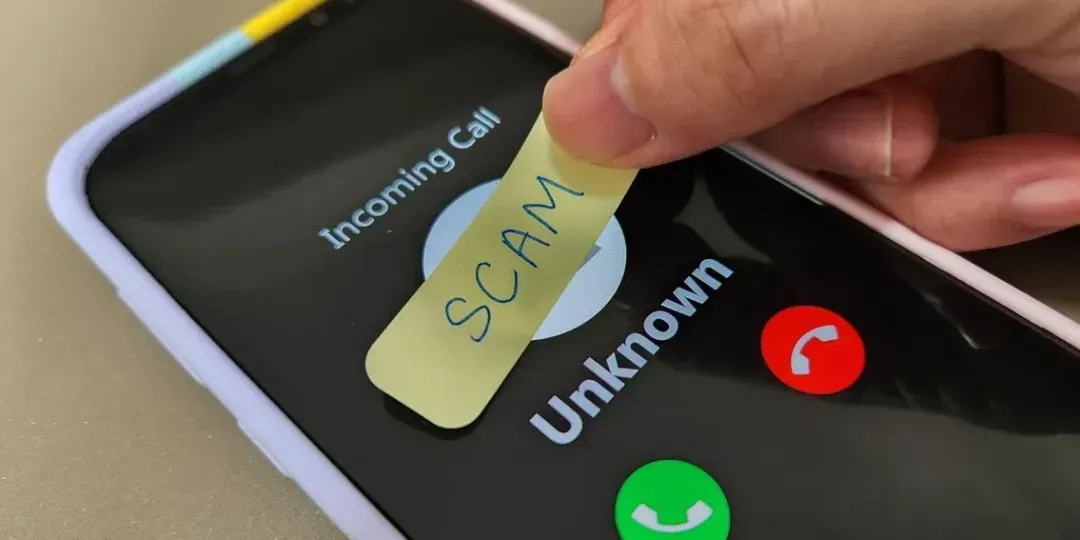
She's far from alone. A lawyer in Philadelphia got a "son in trouble" call too. His description of the moment says it all: "You have no time to think. There's just one thought in your head — I have to save him, now."
According to the FBI, Americans lost close to $900 million to AI-related fraud last year, and the cases built on cloned voices are growing the fastest of all.
A few seconds of audio is all it takes
Many people assume cloning someone's voice requires a big library of recordings. It doesn't. Experts say a scammer needs only a few seconds of real speech to spin up a startlingly convincing voice with off-the-shelf AI cloning tools.
Where does that audio come from? Maybe a short clip you posted to social media. Maybe a few sentences you said when an unknown number called and deliberately kept you talking.
Beyond pre-synthesized clips, more advanced setups can change a voice in real time during a live call — the scammer speaks, and the audio morphs into someone you know, holding a natural back-and-forth with you.
Scammers also spoof caller ID so the number matches your family member's. So even when a familiar name flashes on your screen, it's no guarantee the person on the other end is real.
What the scam really exploits is your panic
A convincing voice is only step one. What actually gets people is the familiar script:
Impersonate a relative or friend, manufacture an emergency too urgent to think through — a kidnapping, an arrest, a car crash — then demand you wire money immediately and tell no one.
The entire point is to deny you time to think. The moment panic sets in, the moment you feel "every second I wait puts them in danger," your judgment falls off a cliff.
Telling real from fake by ear is no longer realistic
One expert who advises governments and companies on AI media put it bluntly: AI-generated speech is now convincing enough that most people can't reliably tell the difference — "even I find it hard to tell."
In other words, expecting an ordinary person to catch a voice clone just by listening isn't realistic anymore. If the voice can't be trusted as a line of defense, the line that holds is behavior.
The defenses that actually work are a handful of fixed habits
This playbook beats second-guessing whether a voice is genuine:
Hang up on an emergency call and reach back a different way. Call the person on the number you normally use, send a text, or contact someone who knows where they are — confirm the situation is real before doing anything else.
Watch for the red flags. Manufactured urgency, a demand for secrecy, a request to move money in an unusual way — any one of them is reason enough to stop.
Agree on a family safe word in advance. Pick a word or question only your inner circle knows, and use it to verify identity in a crisis. If the caller can't answer it, that's basically your answer.
Put less of your voice on public platforms. Especially clear, talky short videos and voice messages — the less raw audio you leave lying around, the less a scammer has to work with.
AI makes "sounding like someone" easier by the month. What it still can't fake is the one phrase only the two of you understand.
So the next time a familiar voice is rushing you to send money right now — take a breath, hang up, and call back.
References
Related
AI Surveillance Cameras That Spot Someone About to Jump — and Have Already Saved Two Lives in Japan
Tokyo startup Asilla has bolted behavior-recognition AI onto ordinary surveillance cameras, training it to flag people who pace at a platform edge or linger by a rooftop railing and alert security the moment something looks wrong. The AI video-analytics system was trained on roughly 7 million clips and now runs across about 40 stations and malls in Tokyo and Kanagawa, where it has already intercepted at least two people.
OpenAI Reboots Its Robotics Team: First to Help Build the World, Then a Personal Robot for Everyone
The company behind ChatGPT and Sora is quietly hiring its way back into robotics. Five years ago, OpenAI shut down its own robotics division and called the path a dead end.
AI 'Griefbots': Talking to the Dead Again, and the Uneasy Comfort of Digital Clones
Feed an AI a deceased person's chat logs and voice recordings and you get a conversational "digital clone" — what's now called a deathbot or griefbot. Some people find real healing in it; others worry it keeps the grieving from ever letting go.