Pope Leo XIV's First Encyclical Makes AI Its Mission: Artificial Intelligence Must Serve Humanity, Not the Powerful Few
On May 25, Pope Leo XIV released his first encyclical, *Magnifica Humanitas* ("The Splendor of Humanity"). It is the first papal encyclical in Catholic Church history to center on artificial intelligence — and Anthropic co-founder Chris Olah was there for its launch.
An encyclical is the highest form of teaching a pope addresses to Catholics worldwide. A new pope's first encyclical usually signals the cause he intends to define his papacy. Pope Leo XIV chose artificial intelligence.
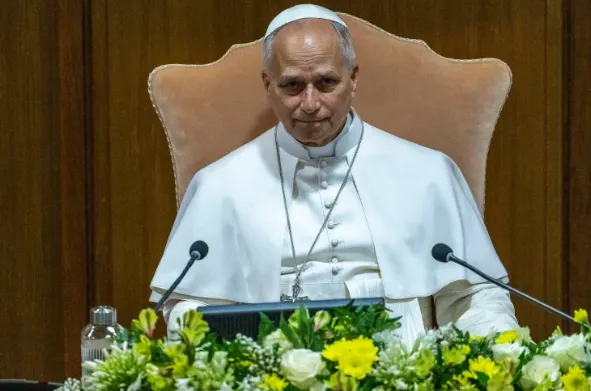
It is the first time in the Church's history that a papal encyclical has placed AI at its center.
Why this moment, and why this date
The encyclical is dated May 15 — and the date is not an accident.
It falls exactly 135 years after Pope Leo XIII issued Rerum Novarum in 1891, the document widely regarded as the founding text of modern Catholic social teaching. Rerum Novarum was written in response to the upheaval of the Industrial Revolution and the plight of the new working class.
By echoing it, the new pope makes his framing unmistakable: in his eyes, AI is a turning point on the scale of the Industrial Revolution itself.
The core message of Magnifica Humanitas
A single thread runs through the document: artificial intelligence must serve people, not a powerful few.
The encyclical concentrates on three concerns:
01 | The danger of AI-driven warfare. AI is being weaponized far faster than the ethical frameworks meant to govern it can be built.
02 | AI's impact on work. The technology is spreading so quickly that protections for ordinary workers cannot keep pace.
03 | A handful of companies dominating AI risks "a new form of dehumanization." The opacity of the underlying algorithms is, in itself, a stripping-away of human agency.
An Anthropic co-founder at the Vatican
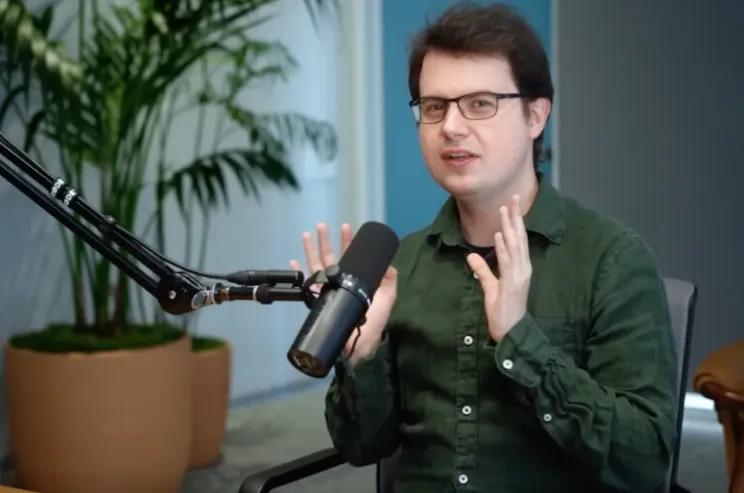
Chris Olah, a co-founder of the AI lab Anthropic, attended the launch and made several striking points:
- Building AI models is less like engineering and more like "growing" them. Models grow out of human language and thought, and researchers are still working to understand what happens inside them.
- In experiments, models display internal states "functionally similar to joy, fear, sadness, and unease."
- Every frontier AI lab operates under overlapping commercial, research, and geopolitical pressures — which is precisely why external oversight matters.
He left three open questions on the table: How can the benefits of AI be shared fairly across the world? What should human flourishing look like in the age of AI? And what, ultimately, is the inner nature of an AI model?
Where the pope and Anthropic part ways
One exchange at the launch was especially telling.
Olah suggested that AI models show signs of "introspection" and emotion-like internal states.
The pope takes the opposite position in the encyclical: these systems merely imitate certain functions of human intelligence and possess no genuine inner life.
On that point, they disagree. But they converge on something more important: AI is advancing too quickly for tech companies alone to chart its course — and broader society needs a seat at the table.
References
- 01https://www.vatican.va/content/leo-xiv/en/encyclicals/documents/20260515-magnifica-humanitas.html
- 02https://www.theverge.com/news/936945/pope-leo-letter-encyclical-ai-anthropic-labor-warfare
- 03https://www.anthropic.com/news/chris-olah-pope-leo-encyclical
- 04https://the-decoder.com/at-the-launch-of-pope-leo-xivs-encyclical-anthropic-co-founder-says-ai-models-show-signs-of-introspection/
- 05https://religionnews.com/2026/05/25/in-his-first-encyclical-pope-leo-xiv-says-ai-must-serve-humanity-not-the-powerful-few/
Related
AI Surveillance Cameras That Spot Someone About to Jump — and Have Already Saved Two Lives in Japan
Tokyo startup Asilla has bolted behavior-recognition AI onto ordinary surveillance cameras, training it to flag people who pace at a platform edge or linger by a rooftop railing and alert security the moment something looks wrong. The AI video-analytics system was trained on roughly 7 million clips and now runs across about 40 stations and malls in Tokyo and Kanagawa, where it has already intercepted at least two people.
AI Voice Cloning Can Fake Your Family in Seconds — Here's the One Safe Word That Beats the Scam
Americans lost roughly $890 million to AI-related fraud last year, and AI voice-cloning scams are the fastest-growing slice of it. A few seconds of audio is all a scammer needs to clone a loved one's voice — and the FBI and experts admit even they can no longer reliably tell real from fake. Instead of trusting your own ears, lock in a few fixed defenses — starting with a family "safe word."
OpenAI Reboots Its Robotics Team: First to Help Build the World, Then a Personal Robot for Everyone
The company behind ChatGPT and Sora is quietly hiring its way back into robotics. Five years ago, OpenAI shut down its own robotics division and called the path a dead end.