9 of Every 10 Humanoid Robots Are Made in China — and It's Shaping Up to Be the Next EV-Scale Industry
Chinese humanoid-robot maker Unitree alone holds **32.3%** of the global market. In just two years, the price of a humanoid robot has fallen from that of a luxury car to that of a smartphone.
In 2023, the average Unitree humanoid robot cost about $85,000 — roughly the price of a luxury car. By 2025, the Unitree R1 started at 29,900 yuan (about $4,100). In two years, 90% of the price evaporated.
Even more aggressive is Bumi, from Booster Robotics: a 94-cm bipedal robot priced at 9,998 yuan — less than most used family cars, and about the cost of a high-end iPhone.
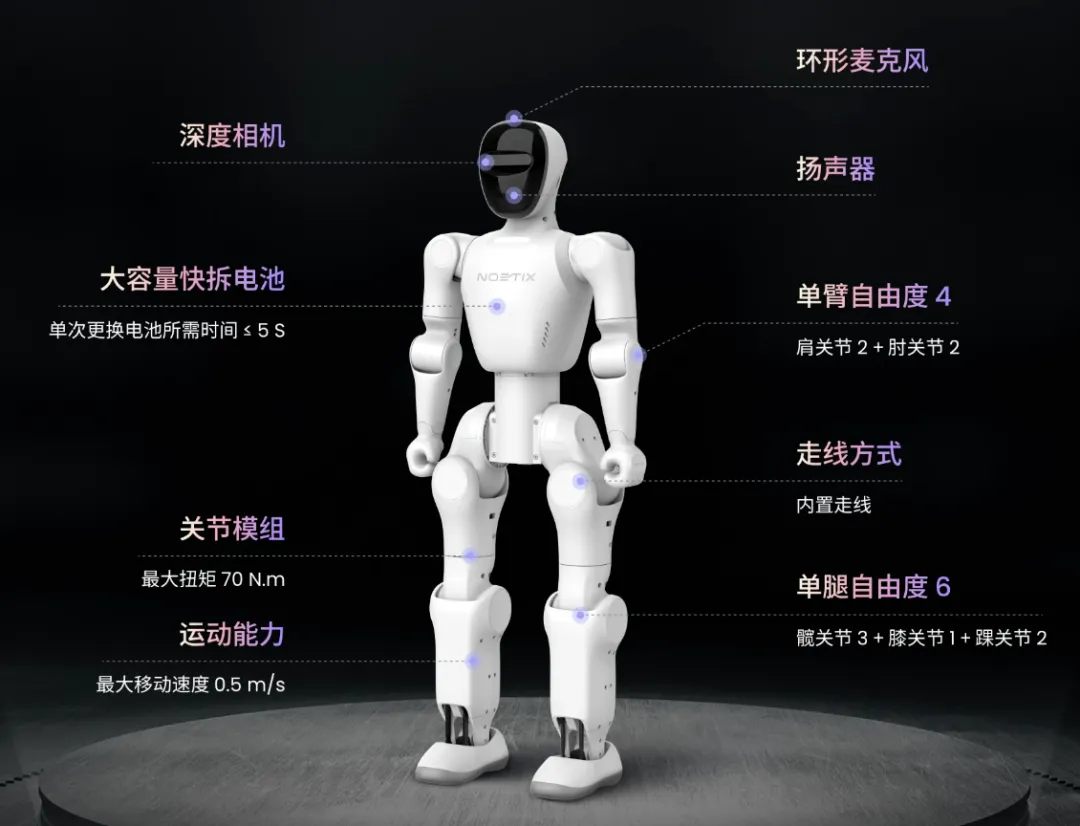
Humanoid robots are walking the same road electric vehicles did: from luxury good to mass-market product.
Chinese manufacturers are already mass-producing humanoids
According to public reports, more than 13,000 humanoid robots shipped worldwide in 2025 — and roughly 90% were built by Chinese makers. Chinese companies released 28 new models in a single year, nearly triple the US tally. The country now has more than 140 manufacturers and a cumulative 330-plus models.
By shipment volume, the top three vendors are all Chinese: AgiBot, Unitree, and UBTech.
The supply chain that builds cars happens to build robots
Humanoid robots and EVs draw on one shared supply chain: motors, reducers, batteries, sensors, control chips. The factories, the engineering talent, and the upstream parts overlap heavily.
More than a dozen automakers have already jumped in — BYD, GAC, Chery, Xpeng, NIO, Li Auto, and Xiaomi among them. BYD launched a humanoid-robot effort inside its 15th Business Division, codenamed "Yao Shun Yu," pursuing in-house R&D and outside investment in parallel.
It rhymes with China's EV trajectory. In 2014, BYD was still chasing Tesla; a decade later, its annual sales had overtaken it. The same supply-chain base, and the same march from high prices to affordable ones, is now replaying in humanoid robots.
The pull is global. Tesla has assembled a team in China to source sensors, brushless motors, and reducers for its Optimus robot, and Figure AI's early models likewise drew joints, sensors, and motors from Chinese suppliers.
Cheap is one thing; doing chores is another
A four-digit price tag doesn't make a robot genuinely useful.
Today's 29,900-yuan machines are good at walking, running, carrying light objects, and running scripted demos. Pouring a glass of water, tidying a desk, washing dishes, folding laundry — these everyday tasks remain unreliable.
The industry consensus is that 2026 marks "year one of commercialization." Unitree's 2026 shipment target is 10,000 to 20,000 units. Demand sits mostly in B2B settings: factory inspection, security, education and research, live performances, and rentals. Widespread adoption in the home is still some way off.
A new industry usually breaks out the moment its prices drop to where ordinary consumers can afford it.
EVs took about a decade to walk that path. China's humanoid robots may move a good deal faster.
References
Related
OpenAI Reboots Its Robotics Team: First to Help Build the World, Then a Personal Robot for Everyone
The company behind ChatGPT and Sora is quietly hiring its way back into robotics. Five years ago, OpenAI shut down its own robotics division and called the path a dead end.
AI Surveillance Cameras That Spot Someone About to Jump — and Have Already Saved Two Lives in Japan
Tokyo startup Asilla has bolted behavior-recognition AI onto ordinary surveillance cameras, training it to flag people who pace at a platform edge or linger by a rooftop railing and alert security the moment something looks wrong. The AI video-analytics system was trained on roughly 7 million clips and now runs across about 40 stations and malls in Tokyo and Kanagawa, where it has already intercepted at least two people.
AI Voice Cloning Can Fake Your Family in Seconds — Here's the One Safe Word That Beats the Scam
Americans lost roughly $890 million to AI-related fraud last year, and AI voice-cloning scams are the fastest-growing slice of it. A few seconds of audio is all a scammer needs to clone a loved one's voice — and the FBI and experts admit even they can no longer reliably tell real from fake. Instead of trusting your own ears, lock in a few fixed defenses — starting with a family "safe word."